I once read somewhere that English is the language of the marketplace. It is a commodity language, and that is precisely why it has gained such popularity. It is malleable, meaning that it can change as economies change. Economy as in monetary systems, but also as in conquest. The English language has morphed under every regime change. This is why English, though technically a Germanic language, contains influences of French (Norman), Irish, Norse, Latin, and a host of adopted words from across the planet. This is precisely why I cannot understand my German cousins, despite our similar roots, as they speak their complex compound words across the table. It is also why English is the most versatile of all languages and contains the fastest growing dictionary.
English may have its trickier bits – explain “their, there, and they’re” to a non-native speaker – but compared to other languages, such as Romance languages, we do not have gendered nouns, alternating verb endings, noun cases. Even if you were to mix up the royal order of adjectives (example: the unbelievably giant ancient rotund mauve Cypriot) we could still understand what it is you are saying, and mistakes often lead to colloquialisms and dialects. This is not to mention that the English language utilizes the Latin alphabet which almost all people of the world can now read and pronounce. Thus, other alphabets – Cyrillic, Arabic, Hebrew, etc. – are now easily prised apart and understood through their Latinate equivalent.
What I am saying is that I adore English for these very things, and what I am also saying is that I feel English deeply lacks something vital.
The English language lacks a sense of place. Therefore, English often is, but does not have to be, a tool of forgetting.
I initially decided to write this specific post because I stayed up late last night thinking of my favorite words (my life is very, very boring). “Ablution” is probably my favorite word of all time. It is a word derived from Middle French and Middle English that defines the act of ritual bathing for religious purposes. Another favorite word is “Loblolly,” which, for those who do not live in my part of the world, is a type of pine tree found across the southeastern United States. A quick Wikipedia search (apologies to my high school English teacher) tells us that “lob” is a type of thick, bubbling porridge, while “lolly” is an old British term for “broth, soup, or any other food boiled in a pot.” As these trees are normally found in swampy areas, I suppose it makes sense.
I stumbled across a word recently that so perfectly captures a very specific, very rich ritual in my life, one that I still practice even though others have grown up and moved on from frivolities like these. It was found in Robert MacFarlane’s Landmarks, a delicious book that compiles nearly-forgotten words across the British Isles, spanning from the Channel Islands to the very tip of Shetland, out to the western reaches of Northern Ireland, to the land of my ancestors in the frigid east. It was this word, in particular, that stopped me:
“Glassel (n): A seaside pebble which was shiny and interesting when wet, and which is now a lump of rock, but which children nevertheless insist on filling their suitcases with after a holiday.”
(Check out this wonderful article in The Guardian).
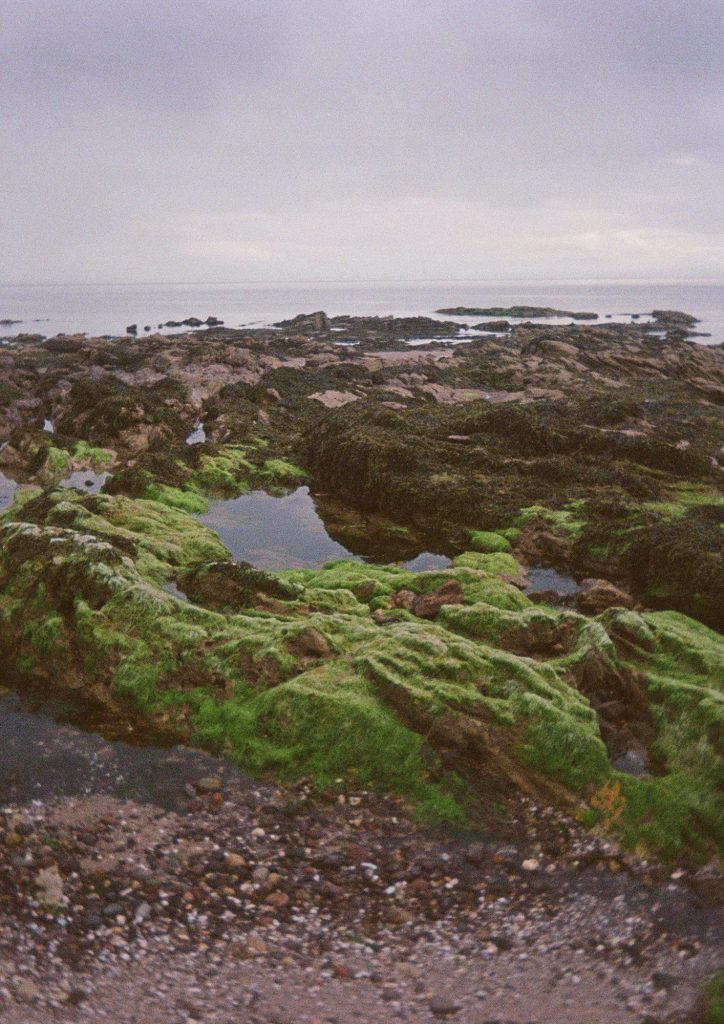
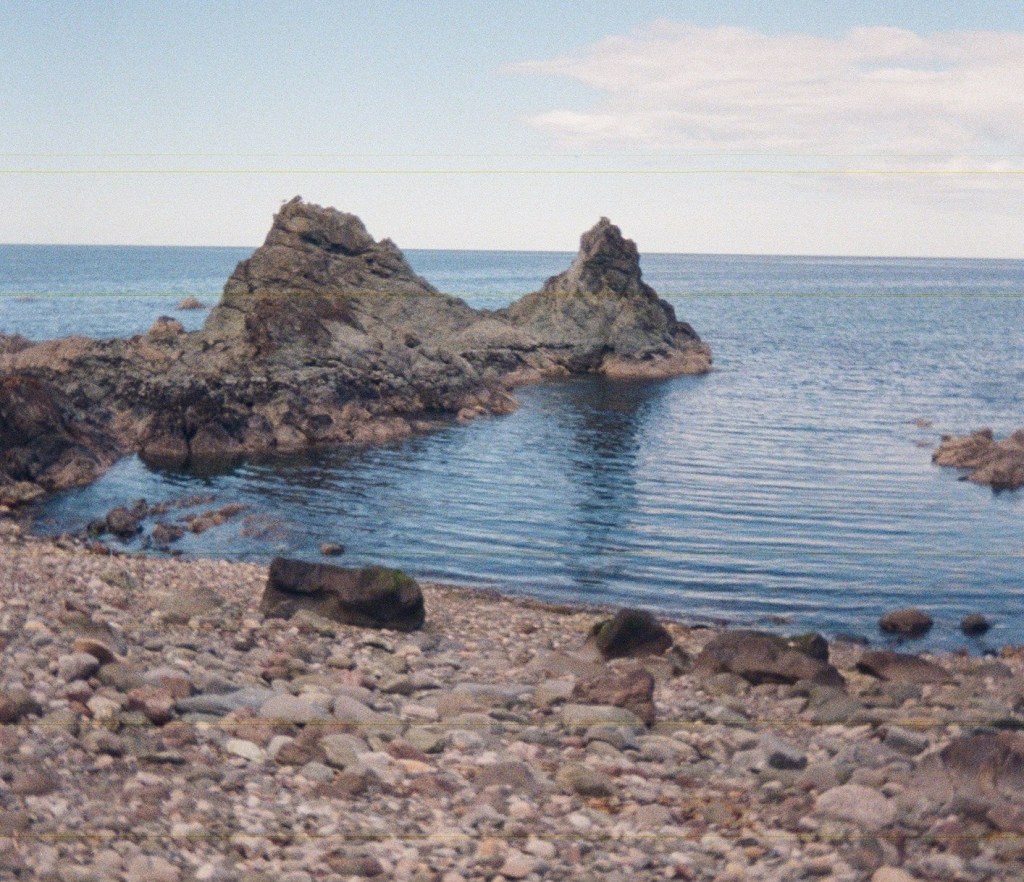
I am an avid collector of glassel. My first encounter with it is beyond my reckoning, perhaps somewhere in Western North Carolina, but the moment I fell in love with it was on a trip to Scotland in 2017. When not shearing sheep or picking raspberries on the farm of a well-intentioned, if not eccentric and slightly combative, Englishwoman, I was able to take small side trips to the towns and villages of Aberdeenshire. Portsoy, along the Moray Firth, was where my love of glassel was first solidified for there, all across the rocky beaches, were stones glittering red and green just beneath the surface of that clear, cold water. These stones are colloquially known as “Portsoy Marble,” which, in reality, are serpentine fragments dislodged and discarded from an 18th-century quarry. Fun fact: this serpentine was used to create the fireplaces in the Palace of Versailles.
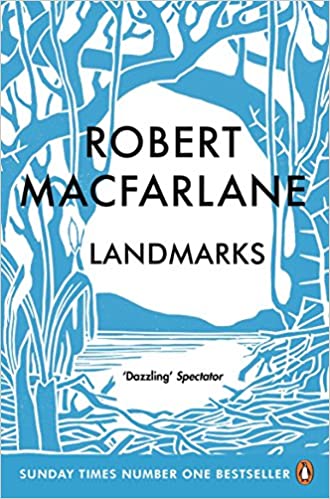
Landmarks by Robert MacFarlane (Penguin Books, 2016).
P.S. There is no monetization here. Only a deep and abiding love of Robert MacFarlane.
But, like all glassel, these stones need to be polished to shine. Once taken out of the water and sufficiently dried, these rocks look like nothing more than smooth lumps of gray. Nevertheless, they sit in a place of pride on my windowsill just above my writing desk. When I’m feeling bored, I’ll put them into the sink and watch the colors flood back under the tap. It’s the little things.
I have had a hard time unearthing (no pun intended) the etymology of “glassel.” It looks to be a surname with Scots-Gaelic roots. “Glas,” means green or gray, while “ell” is most probably related to a specific place. (Thank you, ancestry.com. I am well aware my sources are not academic, but stay with me.)
This makes sense, in a way. My stones are green and lush under the rolling waves, gray when taken from its natural setting. Green and gray, gray and green. Totally and completely reliant on place to reveal its full beauty.
And so, a place-specific word created by a place-specific people was adopted into a language of the marketplace. No wonder it has been almost completely forgotten. Glassel has no worth. At least, no monetary worth. Collecting glassel is, too, often a childhood hobby, abandoned by adults when they eventually give up on the magic of the world. Unfortunately, adults are keepers of language, and we usually only keep what we need.
In my community, we have little need for the word glassel. Here, geological forces have eroded the Appalachian Mountains into strands of fine sand, littoral zones of dark, muddy water, a few lettered olives here and there. We do not have this word because we do not have glittering oceanic stone. But what words do we have? I can think of none.
I have descriptors, but I have no words for the state of these things. I can describe sand as fine or coarse, hot or clammy-cold, white or beige. But I do not have a singular word to describe the albedo effect of the sun on the sand when the world goes blind and all you hear are tides and tern. I do not have a word for the sand when it blows so hard against your shins it feels like knives.
And so, I often feel like a passerby in the very ecosystem into which I was born. If I have no way to describe it, to describe the very tiny, minute precipices of nature falling from one state into another, how can I hope to be fully at home? How, then, could I ever hope to protect this home?
This language-amnesia is, in my very humble and often very dramatic opinion, one of the catalysts for environmental degradation. How can we love something if we do not have the right words for it? Loving, after all, is communion. And communion is most readily accessible through speech.
I have no solution for this. We killed and starved and drove away the first human settlers of these Sea Islands. They surely had words. I should very much like to hear them.
My only suggestion is that, perhaps, we should do what English does best: adopt words to make our meaning clear. Maybe, on these shores, glassel is the sparkle of broken shell and sharks’ teeth at a low tide. Maybe we can use another one of MacFarlane’s collected words, such as “pir,” or a “light breath of wind, such as will make a cat’s paw on the water.” Maybe we can substitute “cat’s paw” for the hoof of a white-tailed deer, a suburban dog at sunrise, the gentle nuzzle of a wild boar (do they do anything gently?).
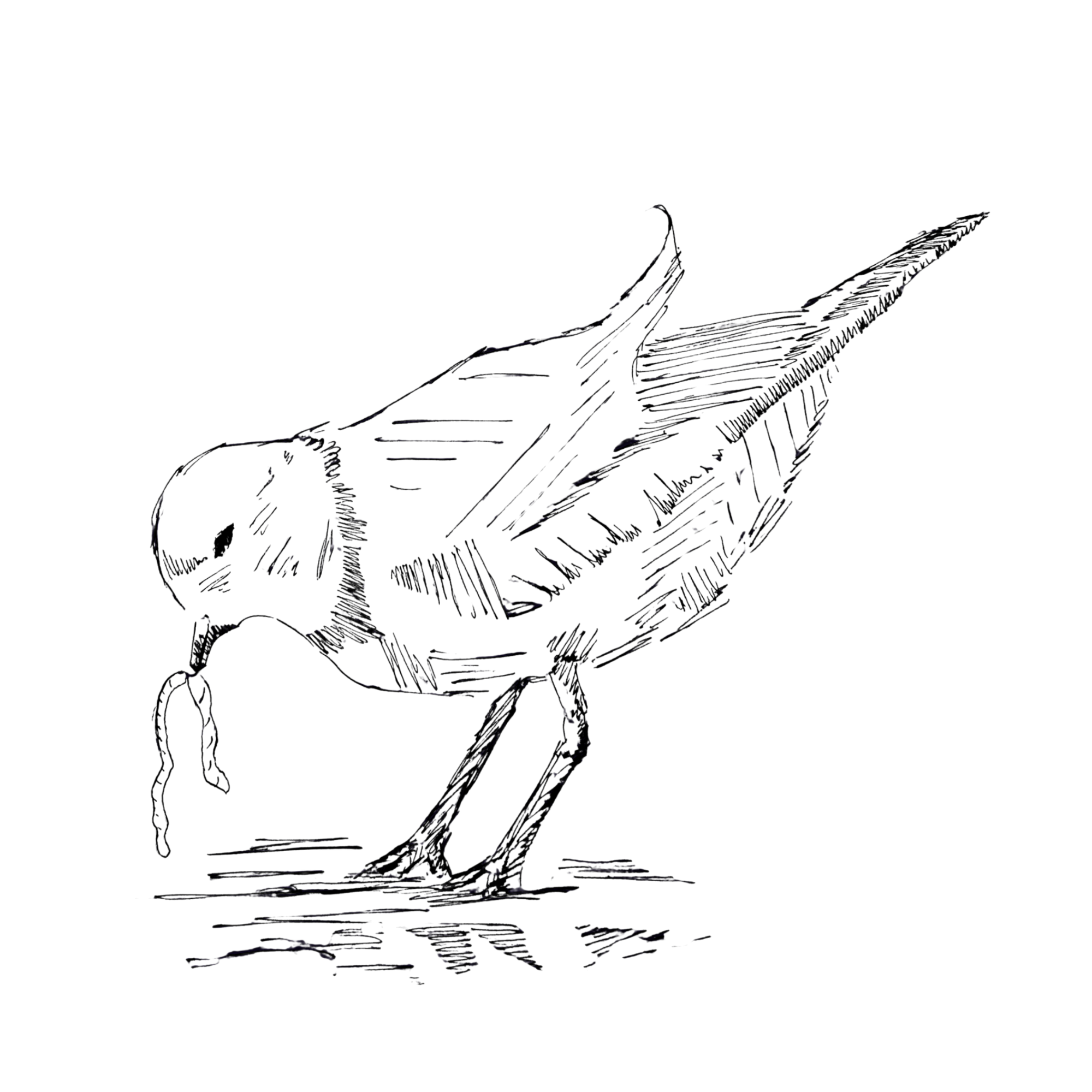
Maybe I’ll come up with my own word one day for the confused head cock of a piping plover before its dives and jerks up a worm the length of its breast. I wonder if it knows how lucky it is to be walking that long stretch of beach thinking only of food, not knowing or ever caring that I am always thinking of it.